

Your Beauty Store Looks Fine. Your Reviews Say Otherwise.
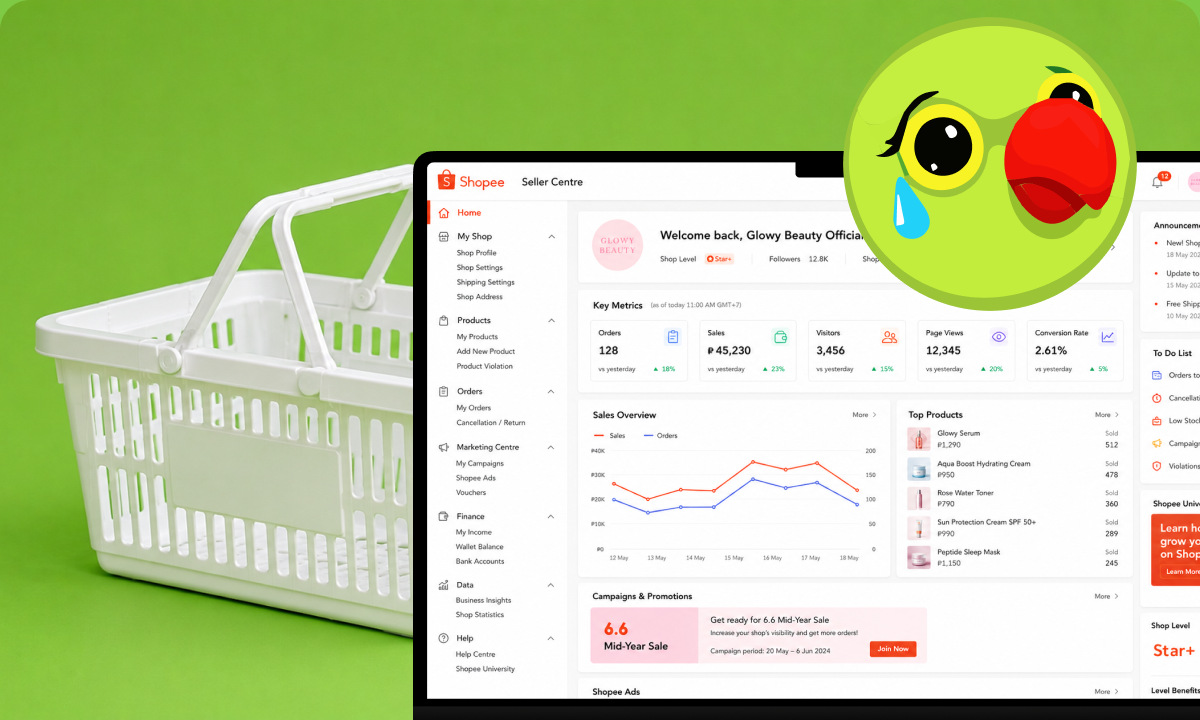
Your Shopee store has a 4.9-star rating. Your dashboard is green. And somewhere right now, a customer who just gave you five stars has already decided not to buy from you again.
That's not a hypothesis. That's what the data says.
TIA analyzed over 832,000 customer reviews across 73 beauty brands on Shopee Indonesia – from mass-market to premium, from skincare to color cosmetics to body care – covering December 2025 through March 2026. What we found wasn't just a list of complaints. It was a map of silent churn hiding in plain sight.
The 94% Problem
Here's the number that changes how you should think about your store: 94% of all customer complaints are buried inside 4–5 star reviews.
Only 6% of complaints show up in 1–3 star reviews – the ones your dashboard actually flags. Which means that for every dissatisfied customer you know about, there are roughly fifteen more you don't.
This isn't unique to one brand or one product category. It's the norm across the Indonesian beauty market. Buyers here have a strong cultural tendency to give the benefit of the doubt. They'll write "love the product, but it arrived a bit damaged" – and still hit five stars. They're not lying. They're being polite. But they've already made a mental note: next time, I'll try somewhere else.
Roughly one in four beauty brands in this dataset carries a significant hidden dissatisfaction layer – meaning more than 10% of their written reviews contain a complaint – while still displaying near-perfect star ratings. These brands look healthy in every standard metric. The text tells a different story.
What's Actually Going Wrong
Across all 73 brands, four complaint categories dominate. Understanding them – and crucially, which ones are actually fixable – is where the retention opportunity lives.
Shipping and fulfillment failures (~38% of all complaints)
The single largest complaint category, and the most operationally preventable. The three main patterns: packaging damage in transit, wrong items sent, and missing or incorrect free gifts.
Packaging damage hits hardest for liquid and gel formats – think pump bottles and squeeze tubes without inner foil seals. No brand format is immune, but these SKU types consistently generate the highest damage rates regardless of the courier used.
Wrong items sent is heavily concentrated in brands with large variant catalogs, and it spikes dramatically during live sessions and flash sales. When order velocity triples in 48 hours, pickers grab wrong variants. The fix isn't hiring more people – it's barcode-to-order scanning at the packing stage.
Free gift failures are the fastest-growing complaint in the dataset, now affecting a significant share of brands in the category. The root cause is almost always the same: gift promises made during live sessions, but no automated verification at packing. Buyers remember every gift that was promised. They notice every one that's missing.
Product and packaging design flaws (~24% of complaints)
This is the hardest category to fix – and the most brand-damaging. Cap and closure failures. Lipstick mechanisms that break with regular use. Compact powder cases that shatter in transit.
What makes these particularly costly is the pattern they reveal: in most cases, the failure isn't random quality control – it's a structural design issue concentrated in one or two flagship SKUs. A brand can have an exceptional product formula and still lose repeat customers because the cap doesn't seal properly.
Lipstick mechanical failure deserves specific mention because it appears across multiple brands in the dataset. The common factor is price-point economics: at accessible price tiers, housing materials aren't designed to absorb daily use or the stress of courier transit. This is a category-wide vulnerability, not a single brand's problem.
Expectation and communication gaps (~23% of complaints)
This is the most actionable category – because almost every complaint here is fixable without changing a single formula, redesigning a single package, or spending a single rupiah on new tooling. It requires only better content.
The results timeline gap is the clearest example. Reviews are typically written within 3–7 days of delivery. But efficacy products – brightening serums, acne treatments, haircare – need 4–8 weeks of consistent use to show visible results. Among brands with efficacy-focused positioning, complaints about "no improvement" or "slow results" represent a substantial share of all negative mentions. And here's the striking part: not one brand out of 73 in this dataset publishes a clear result timeline anywhere in their listing, their product insert, or their packaging. Zero. A single sentence – "Best results after consistent use for 4 weeks" – would prevent a significant portion of these complaints at no cost.
The scent longevity gap follows the same logic. Among fragrance-led brands, longevity complaints make up a notable portion of negative mentions. Products advertised as tahan lama (long-lasting) consistently fade within one to four hours in Indonesian heat and humidity. This isn't a formula problem for most of them – it's a claims precision problem. Replacing "long-lasting" with honest, format-specific wear expectations (body mist vs. EDP vs. body lotion) would eliminate the complaint without touching the product.
Shade mismatch and oxidation affect makeup brands disproportionately. Studio product photography renders colors differently from how they appear on diverse Indonesian skin tones. Among makeup brands in the dataset, shade-related complaints represent a meaningful share of all negative mentions. One brand's entire negative rate – the highest in the full dataset – is driven almost entirely by color mismatch that could be corrected with better listing photography and undertone descriptions. The product itself has no issue.
Safety, trust, and authenticity (~15% of complaints)
Lower volume, but disproportionate brand damage. Skin reactions concentrated in brands positioned as "acne-safe" or "gentle" – where a breakout complaint directly attacks the brand promise. Authenticity concerns (missing QR codes, products arriving unsealed) affecting global brands more severely than local ones, because the trust expectation is higher. Near-expiry dates on promotional items – which is worse than a missing gift, because it raises questions about storage and quality control, not just logistics.
The Flash Sale Trap
Every brand in this dataset with significant promotional activity shows the same pattern: a 3–10x review surge within three to five days of a major flash sale or live session. Some brands see their daily review volume multiply to extraordinary levels overnight.
The math here is worth sitting with. At high review volumes, even a 1% fulfillment failure rate generates hundreds of negative reviews per month. These don't disappear after the campaign ends. They accumulate permanently, and they compound with every subsequent campaign.
The pattern is always the same: a brand invests heavily in a flash sale, orders spike, fulfillment quality drops under the volume pressure, and the damage shows up in the review profile for months. Pre-campaign fulfillment audits – checking packaging integrity, gift stock, and variant accuracy before every major window – are worth more than any post-campaign review management effort. By the time the negative reviews appear, the damage is already done.
The Non-Obvious Findings
Waterproof mascara generates complaints about the product working too well. When removal is difficult, buyers blame the formula – even though the product is doing exactly what it claims. A removal guide in the box would eliminate a meaningful share of these complaints without any formula change. The product's greatest strength is generating its own negative reviews.
Glitter and shimmer finishes are invisible in listings and explosive in reviews. Unexpected shimmer in blush or lip products is a recurring top negative. Buyers who wanted matte felt misled. Adding finish-type labels (matte / satin / shimmer / glitter) to listing titles costs nothing and eliminates the complaint entirely.
Ingredient literacy is no longer a premium-segment trait. A legacy budget brand – products priced at Rp 15,000 – scores ingredient discussion rates nearly equal to the highest premium brand in the dataset. Buyers at every price tier are reading ingredient lists, discussing Niacinamide and Centella Asiatica, and noticing when formulas change. Any reformulation at any price point will be reviewed.
Fragrance is the unspoken primary purchase driver in baby care. Aroma topic share in baby brands rivals fragrance brands. One baby cologne earns among the highest fragrance praise counts in the entire dataset – more than most dedicated perfume brands. Safety and efficacy are table stakes in this segment. Scent is what actually drives the purchase.
Scent is simultaneously a brand's biggest asset and biggest vulnerability. For body care brands where fragrance dominates review mentions, any batch or supplier change that affects the scent profile is a customer-facing crisis – not a sourcing decision. Buyers notice. They write about it. And they don't come back.
What This Costs You
Every one of these invisible complaints carries three retention costs that compound over time.
The first is the lost repeat purchase. A buyer gives five stars, mentions a leaked bottle in the text, and your dashboard marks them as satisfied. They've already decided to try a competitor next time. With 94% of complaints invisible in star ratings, brands are losing repeat customers they don't even know they had a problem with.
The second is the deterred new customer. Prospective buyers read the text of positive reviews before purchasing. "Great product but packaging arrived damaged" deters the next customer – the one your ads just paid to bring to your listing.
The third is compounding ad spend. Every lost repeat customer needs to be replaced with a new acquisition. That new customer arrives and hits the same unfixed problem. The cycle repeats, and customer acquisition costs rise continuously – not because your ads got worse, but because your retention problem is invisible.
Four Things You Can Do Right Now
- Publish result timelines. For any product with efficacy claims – brightening, acne treatment, hair growth – add a clear timeline to your listing and product insert. Week one expectations. Week four. Week eight. No brand in this dataset has done this. It's an open opportunity.
- Add finish-type and longevity labels. Matte or shimmer? Body mist or EDP wear time? These are one-line additions to your listing that eliminate entire complaint categories.
- Audit your gift fulfillment before your next campaign. If you've promised gifts in a live session or listing, verify inclusion at packing – ideally with a scan step, not manual checking. The fastest-growing complaint category in Indonesian beauty right now is a missing gift.
- Treat pre-campaign as more important than post-campaign. Before your next flash sale or Ramadan push, run through packaging integrity, variant accuracy, and gift stock. The reviews that come out of a high-volume event stay on your profile permanently.
The brands that will outperform in Indonesian beauty over the next year aren't necessarily the ones with the best formulas. They're the ones that close the gap between what their customers experience and what their dashboards show.
That gap starts in the text of your reviews.
Want to see what your customers are actually saying – beyond the stars? TIA analyzes reviews across Shopee, Tokopedia, Lazada, and TikTok Shop so you can find the problems before they become permanent. Learn more →