

The Repeat Buyer Is the Real Reviewer
The most dangerous review in fashion isn't written by someone who had a bad first experience. It's written by someone who had a great first experience and then came back.
"Before it was thicker. Now it feels different." "I ordered the same size as last time and it doesn't fit the same way." "The quality used to be better." These phrases appear across eight brands in TIA's Fashion & Sport dataset – and they share something in common: they come from buyers who already trusted the brand. Who already converted. Who were, by any standard retention metric, a success story.
TIA analyzed over 390,000 reviews across 44+ fashion and sport brands on Shopee Indonesia, covering December 2025 through March 2026. The data spans footwear, menswear, womenswear, modest fashion, denim, intimates, jewelry, bags, and sportswear. Across all of them, the same pattern holds: the buyers who write the most damaging reviews aren't strangers. They're regulars.
Sizing Is a Trust Problem, Not a Fit Problem
The single largest complaint driver across the entire Fashion & Sport dataset is sizing inconsistency and it appears in every subcategory without exception. Footwear, apparel, denim, intimates, jewelry. All of them.
But the most damaging version of this complaint isn't "this runs small." It's "this fits differently than the last time I ordered the same size." A buyer who orders based on a previous successful purchase and receives something that doesn't fit the same way doesn't just have a return to process. They have a reason to question whether they can trust the brand's sizing at all.
This bidirectional sizing complaint, where the same brand generates "too big" and "too small" reviews simultaneously, appears across footwear, denim, and intimates in this dataset. It points to grading inconsistency across models and production batches, not a simple directional bias that a "size up" recommendation can fix. Publishing actual garment measurements per model, not just a size chart, is the structural solution. Generic advice doesn't address a structural problem.
Fabric Consistency Is the Apparel Version of Sizing
For shirts, knitwear, modest fashion, and denim, the equivalent of sizing inconsistency is fabric inconsistency. Same product, different batch, different feel.
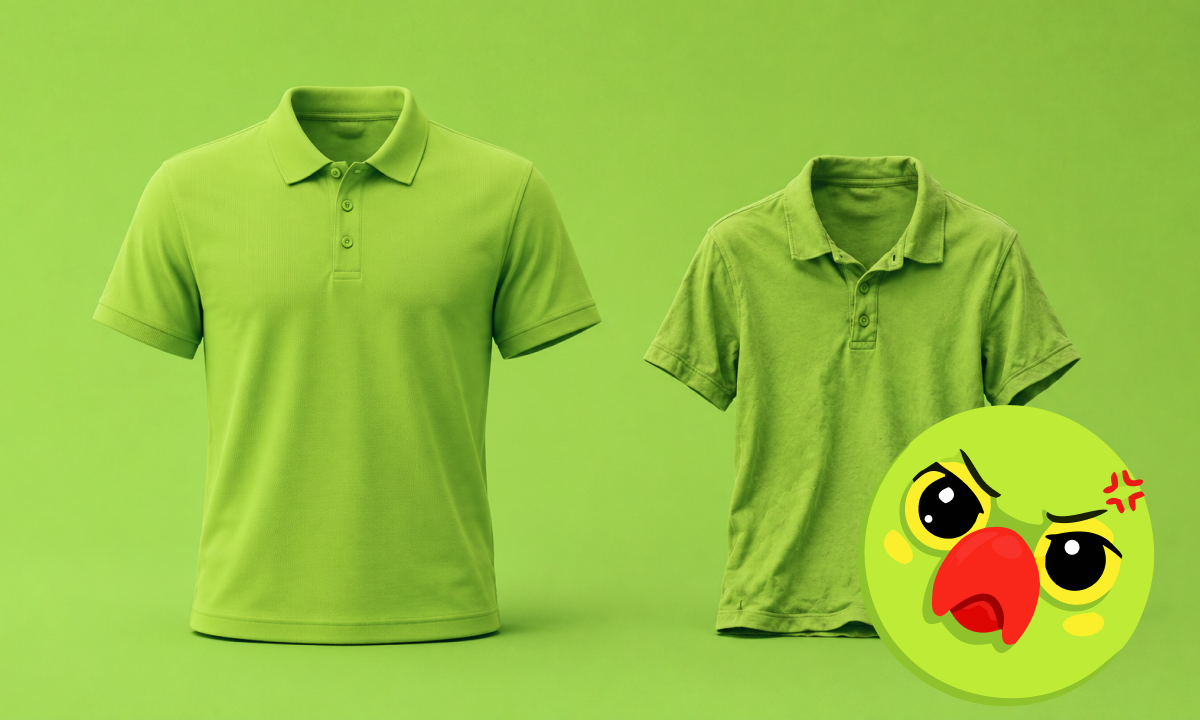
Buyers across multiple brands describe receiving items that feel thinner, rougher, or lighter than a previous purchase of the same SKU. In most cases they're not reporting a defective product. They're reporting that their mental benchmark built on a successful previous order no longer matches what arrived.
This is a loyalty tax. The buyers writing these reviews are the most valuable segment a brand has: people who liked the product enough to come back. When they notice a change (even a small one) they write about it with more detail and more emotional weight than a first-time buyer ever would. And because they're comparing to a specific previous experience, their complaint is harder to dismiss as a misunderstanding.
Modest fashion adds a specific layer here. For gamis and blouses worn outdoors during Lebaran, breathability isn't an aesthetic preference – it's a functional requirement. Fabric that photographs well but traps heat fails the actual use case. Buyers in this segment don't write mild disappointment reviews. They write about wearing a garment to a family gathering in tropical heat and being uncomfortable the entire time.
Color, QC, and the Pre-Shipment Moment
Wrong color delivered is a top-three complaint across more than a dozen brands in this dataset. Wrong size, wrong variant, item arriving with stains or uneven stitching – these complaints appear consistently, and they share the same root cause: problems that a basic pre-shipment check would have caught.
For some brands, the QC failure is visible in the review language. Buyers describe receiving items with black stains on the front, unfinished hems, misaligned zippers, messy glue lines around soles. These aren't subtle defects. They're things that someone picking and packing the order would have seen, if they were looking.
For jewelry brands, material claim accuracy is its own category of trust failure. When a product marketed as anti-tarnish or anti-rust turns black within weeks of purchase, buyers don't feel let down by quality – they feel misled by the description. The fix isn't better QC. It's more honest listing language.
What Lebaran Reveals
Every year, the Ramadan and Lebaran window acts as a stress test for every operational gap a brand has been managing.
Across Fashion & Sport, the pre-Eid period in March 2026 shows the same pattern across more than a dozen brands: review volume spikes sharply, and negative reviews cluster around fulfillment delays, wrong items, and QC failures that didn't appear at lower volumes. For modest fashion brands, Lebaran adds a specific pressure – garments purchased for Eid gatherings have zero tolerance for wrong color, late delivery, or fabric that doesn't meet modesty requirements. A wrong-color dress that arrives after the holiday isn't just a return. It's a failed occasion.
The brands that manage Lebaran well in this dataset, and their review profiles show it, treat the pre-Eid window as a fulfillment stress test, not just a sales opportunity. More QC checks, not fewer. Tighter variant verification, not looser. The brands that don't carry those reviews permanently into the next season.
The After-Sales Gap Nobody Has Closed
Across all 44+ brands in this dataset, exactly one brand earns consistent, specific praise for its return and exchange process. Buyers mention responsive admin, smooth exchanges, and appreciated freebies by name. They write about it in reviews unprompted.
Every other brand in the dataset has this gap. Buyers who receive wrong sizes or defective items consistently describe support as slow, unhelpful, or unresponsive. They don't just feel disappointed by the product failure – they feel abandoned after it.
The commercial opportunity here is clear. The brand that moves second to build a visible, fast after-sales process will capture the same competitive advantage. In a category where most purchases are considered, where sizing requires trust, and where repeat buyers are the most valuable customers – the moment after something goes wrong is when retention is actually decided.
What the Data Shows About Where Fashion Retention Lives
The brands with the lowest negative rates in this dataset (some below two percent across tens of thousands of reviews) aren't necessarily selling better products than the brands with higher rates. They're doing three things consistently: maintaining fabric and sizing consistency across batches, catching QC failures before the parcel leaves the warehouse, and building enough trust that when something does go wrong, the buyer gives them another chance.
That last part is the hardest to build and the easiest to lose. A repeat buyer who feels something changed (the fabric, the fit, the quality) doesn't just stop buying. They write a review that tells every future buyer the same thing. And unlike a first-time negative review, this one carries the credibility of someone who used to believe in the brand.
The text of fashion reviews is where that trust is being tracked, in real time, by the buyers who matter most. Most brands aren't reading it.
Want to see what your repeat buyers are actually writing before the trust gap becomes permanent? TIA analyzes reviews across Shopee, Tokopedia, Lazada, and TikTok Shop so you can find the signals your dashboard is missing. Learn more →